Do You Know Your Rights As A Student of Northern Caribbean University?
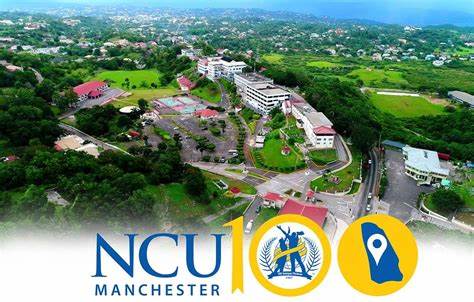
Northern Caribbean University, is 7th Day Adventist institution. NCU has a its mission which is based on the quality Christ-centered education achieved through academic excellence, social interaction, physical and spiritual development and a strong work ethic, thereby fitting each student for committed service to country and to God.
The vision statement is– Strategically located, Northern Caribbean University aspires to be the center of holistic higher education, upholding Christian values in an intellectually stimulating environment. The value statement is – Ubi Semper Discimus – Where Learning Never Ends. The core values include: C – Christ-centeredness, A – Affirmation, R – Respect, E – Excellence, S – Stewardship (Student Guide, 2014).
Do you remember hearing the phrase every child can learn every child must learn it is under that scope as a student of Northern Caribbean University that you have a right to learn. However, let us face the reality of acknowledging your rights as a student at this university.
Students’ Rights and Freedoms
Northern Caribbean University students are classified as members of the academic community. As members of the NCU community, students have special obligations and should be remind as such. Within this academic community elements such as integrity, and the exercise of appropriate restraint and respect for the opinions and feelings of others are crucial. In order for students to reflect positive behaviour they must know the characteristic of their rights.
Students’ Right to Enquire
A student who wishes to explore matters regarding university policies and procedures that affect personal life, or concerns of general interest, may address such to the appropriate administrator or committee. If the student is unsuccessful in discussing the matter with the appropriate authority, a formal letter may be submitted to the Vice-President for Student Services who has the
option of:
- Contacting the appropriate administrator or faculty member to make an
appointment for the student to discuss the matter personally. - Arranging with the student for a personal hearing of the issues.
- Referring the matter to the Arbitration Panel or the Administrative Council for
appropriate action.
Students’ Right of Appeal
Students who take an issue based on administrative approach, policy or regulation should approach such matters in a specific way.
Actions are considered inappropriate when they promote sabotage, strikes, or undermine administrative policies.
Right of Appeal – Matters of public interest for student body where a student wishes to make representation on a point affecting all or a portion of the student body actions may be considered appropriate when the representatives of the student body present recommendations with adequate documentation to the Vice President for Student Services.
The Vice-President will discuss the matter with the United Student Movement and will then:
a. Attempt to work with the Arbitration Panel towards a satisfactory solution of the problem.
b. Refer the matter and/or recommendations to the Administrative Council for resolution in the best way possible. The decision taken should be accepted as final.
Channels for student complaint – Personal
If a student feel as though their academic performance or personal rights have been breached by other students, workers at NCU or any other body within the institution they can following the steps below:
a) The student should speak personally with a faculty or staff member connected to the matter
b) The faculty member should respond and seek an amicable resolution within seven (7) working days of the complaint.
c) If (b) does not result in an acceptable resolution the student may resubmit his complaint in writing to the same faculty or staff member, one (1) working day after the deadline for the faculty member’s original response referred to in (b).
d) If (c) does not result in an acceptable resolution within seven (7) working days of the written complaint being received by the faculty member, the student may submit his or her complaint in writing to the Department Chairperson or the Dean of the College or School.
e) The Department Chairperson or the Dean shall respond and seek an amicable and fair resolution within twenty one (21) days of the written complaint made to them.
f) If (e) does not result in a reasonable resolution the student shall submit a complaint in writing to the Office of the Vice President of Student Services.
g) The student may appeal to the Cabinet after all the above channels have been explored without reaching a satisfactory solution.
h) Where the Cabinet is not able to reach a reasonable solution, the Cabinet shall make a recommendation to the Administrative Council within sixty (60) days of having received the said student’s complaint.
a. If the student is of the opinion that the matter has not been adequately addressed by the appeals process, he may enter discussions with the Ombudsman.
i) All correspondences concerning the student’s right of appeal must be copied to the Office of the Vice President of Student Services (Student Rights, 2014, p.45-46).
With the valid information you now can be protected by theses rights as a student of Northern Caribbean University.

(Dubaikhalifas, 2021).
Reference:
- Boomhower M. (2017). Caring for Kids: Protecting Students Rights. Matthew Boomhower. https://www.matthewboomhower.com/blog/caring-for-kids-seoul-student-human-rights-ordinance
- Buzz Contributor. (2020). National Youth in Agriculture symposium slated for February 5. Buzz Caribbean News. https://buzz-caribbean.com/news/national-youth-in-agriculture-symposium-slated-for-february-5/
- Dubaikhalifas. (2021). Know Your Rights Filing A Bullying Harassment Or Discrimination Complaint With Your School. http://app5.free758.info/
- Office of Student Service. (2014). Students Right. p.45-46. Student Guide. https://www.ncu.edu.jm/Student_Guide.pdf

